Which Warehouse Processes Can AMRs Improve? What Conditions Should Be Confirmed Before Implementation?
The main purpose for enterprises to introduce Autonomous Mobile Robots (AMRs) is to reduce the time employees spend moving goods back and forth, while improving the efficiency of processes such as receiving, replenishment, and picking. However, once an AMR is put into operation, will it necessarily deliver the expected benefits? The answer is clearly no. If the aisles are unsuitable for robot navigation, workstations are poorly positioned, or the existing systems cannot support integration, the AMR may operate smoothly yet fail to improve overall efficiency. Therefore, the key to AMR implementation lies not only in selecting the right equipment, but also in identifying processes suitable for automation and confirming that the existing facility and systems are ready.
How AMRs Improve Warehouse Efficiency
AMRs are particularly suitable for high-frequency material handling tasks and warehouse environments where destinations frequently change. During receiving and put-away, AMRs can automatically transport goods to designated locations. In replenishment and picking processes, they can support a “goods-to-person” model by delivering racks or totes to workstations, reducing the need for staff to walk between racks.
For packing and dispatch, AMRs can also handle material transportation between workstations, reducing manual cart pushing and waiting time. For warehouses with high order volumes, these improvements not only reduce repetitive handling but also allow employees to focus on higher-value tasks such as picking, verification, and quality inspection. As a result, warehouse automation extends beyond a single process to cover the entire logistics workflow.
Benefits of AMR Implementation
When evaluating logistics automation, enterprises are usually most concerned with whether manpower can be redeployed to higher-value work, whether orders can be completed faster, and whether operational errors can be reduced. In addition to equipment operating speed, companies should also assess picking accuracy, order processing time, staff walking distance, and throughput during peak periods.
According to relevant data, automation solutions can potentially deliver the following benefits:
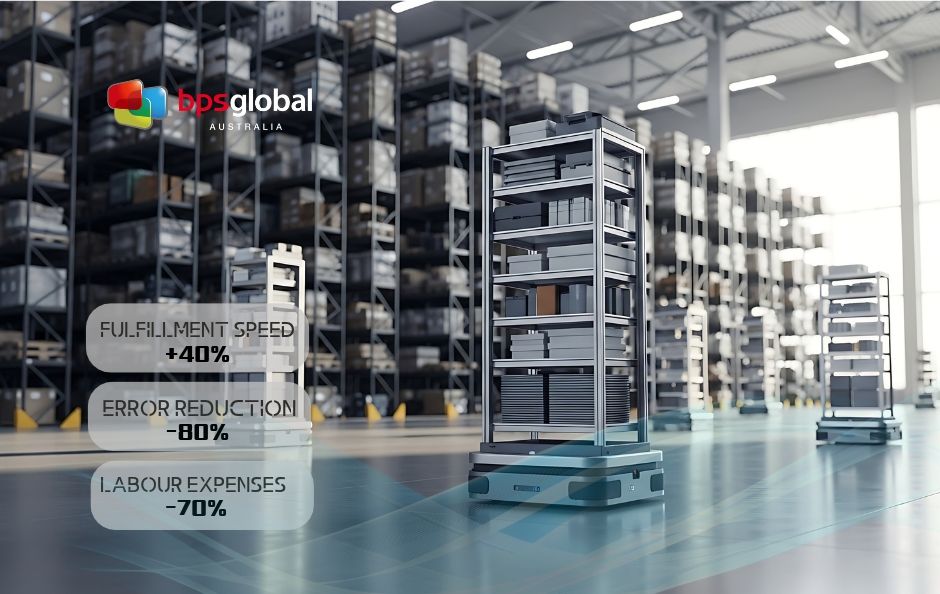
- 40% improvement in fulfilment speed: Faster order processing and dispatch
- 80% reduction in errors: Lower error rates, reducing replenishment and order-correction costs
- 70% reduction in labour costs: Less repetitive handling and manual work
*The above are indicative figures from relevant sources. Actual results will vary depending on warehouse layout, order profile, existing workflows, and the level of system integration. They should not be regarded as guaranteed outcomes for every AMR project.
Integrating AMRs with a warehouse management system enables them to automatically receive and execute transport tasks, reducing manual task assignment and repetitive operations. Enterprises should use pre-implementation operational data as a baseline to objectively assess return on investment.
Four Conditions to Confirm Before AMR Implementation
- Identify efficiency bottlenecks and address the root cause: Understand employees’ daily handling time, busy routes, and processing volumes across each process to determine whether the issue lies in put-away, replenishment, picking, or dispatch.
- Assess the warehouse environment: Aisle width, floor evenness, thresholds, turning points, and intersections between staff and forklifts all affect AMR operation. Adequate parking and charging areas should also be reserved.
- Confirm system compatibility: AMRs need to receive transport tasks and destination information. Integration with systems such as WMS and WCS can reduce manual task assignment and make workflows smoother.
- Calculate return on investment: Beyond equipment costs, companies should consider system integration, facility modifications, maintenance, and training costs. A pilot implementation in a suitable area is recommended before expanding deployment based on actual data.
Case Study: Hong Kong E-commerce Warehouse Automation Achieves 3x Order Processing Efficiency
BPS Logistics Technology designed an integrated automation solution for an approximately 40,000 sq ft e-commerce warehouse in Kwai Chung, Hong Kong. During peak periods, the client needed to process more than 10,000 orders per day. The original picking method was prone to errors, and staff had to work long hours to cope with continuously increasing order volumes.
The BPS team combined mezzanine racking, an AMR-based “goods-to-person” picking model, and automated conveyor systems to redesign the storage, picking, packing, and dispatch processes. This reduced staff movement between racks and improved the connection between different operations.
The overall results after project completion included:
- Picking accuracy of 99.9%
- Order processing efficiency increased to three times the original level
- A 40% reduction in manpower requirements
*The above figures are based on the complete warehouse automation solution.
This case demonstrates that effective warehouse automation requires the coordinated planning of equipment, storage layout, and operational processes to translate automation capabilities into tangible operational benefits.
More AMRs Do Not Necessarily Mean Better Results — Overall Planning Is Key
AMRs can improve multiple processes, including receiving, put-away, replenishment, picking, and dispatch. However, the ultimate benefits still depend on whether facility conditions, system integration, and process design are properly aligned.
BPS Global has long focused on logistics automation and warehouse system integration, with extensive experience spanning process analysis, solution design, equipment selection, system integration, and project implementation. Our team assesses the most suitable AMR applications based on each enterprise’s order volume, operating model, facility constraints, and investment objectives — helping businesses reduce repetitive handling, improve order processing efficiency, and build more flexible, stable, and scalable warehouse automation solutions.
MORE Blogs
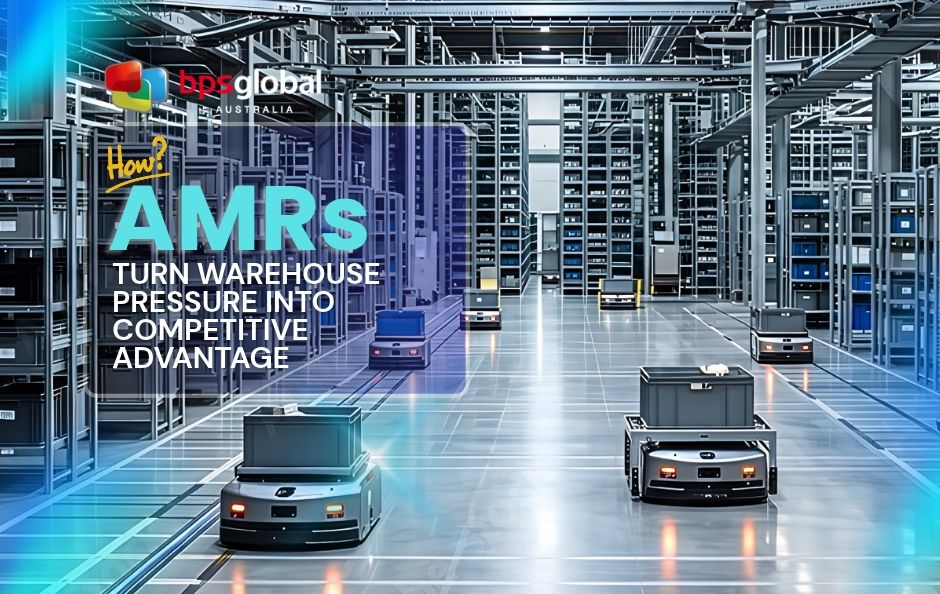
How Autonomous Mobile Robots (AMRs) Turn Warehouse Pressure Into Competitive Advantage
Retail supply chains are no longer judged only by cost per order. They are measured by speed, accuracy, resilience and the ability to scale without disrupting daily operations. For B2B retailers, wholesalers and omnichannel brands, order fulfilment has become a boardroom-level priority.
The Fulfilment Challenge is Structural
Modern retail operations must support e-commerce, wholesale accounts, store replenishment, marketplace orders and returns — often from the same inventory pool. As SKU counts grow and delivery expectations tighten, manual piece-picking becomes harder to sustain.
Common pressure points include:
- High labour dependency and rising recruitment costs
- Inconsistent picking accuracy during volume spikes
- Limited floor-space utilisation
- Difficulty coordinating online and offline demand
- Slow response to seasonal promotions and unexpected demand shifts
Mobile Robotics Changes the Operating Model
Instead of requiring staff to walk long distances across storage aisles, Autonomous Mobile Robot (AMR) systems bring inventory to the operator at a workstation. This “goods-to-person” approach reduces unnecessary travel, standardises workflows and allows teams to focus on higher-value tasks such as quality control, exception handling and customer service.
For B2B operations, the value extends beyond labour savings. A connected robotics platform can help standardise processes across multiple sites, improve inventory visibility and create a more predictable fulfilment cost base.
Built for Product Variety
Retail and wholesale inventories rarely fit a single handling profile. A fulfilment centre may manage small accessories, apparel, fragile goods, bulky items and promotional bundles at the same time.
A flexible automation strategy should therefore support:
- Multiple storage formats and carrier types
- Different picking methods for single-item and multi-item orders
- Dynamic slotting based on demand, seasonality or product velocity
- FIFO, batch and category-specific handling rules
- Consolidation workflows for mixed B2B and B2C orders
This flexibility helps reduce downstream sorting and consolidation work, which is often where fulfilment delays and errors accumulate.
Scale Without Overbuilding
Demand in retail is rarely linear. Promotions, new product launches, market expansion, and peak trading periods can create short-term capacity requirements that a fixed automation installation cannot easily absorb.
AMRs offer a modular path: businesses can begin with a defined picking zone or product category, validate performance, then expand robot fleets, workstations, and storage capacity as volumes grow. This phased approach helps align capital expenditure with actual business growth.
Resilience Becomes a Sales Advantage
For B2B customers, reliable fulfilment is not an internal metric — it is part of the customer promise. Late shipments, stock discrepancies, and inaccurate orders can damage account relationships and increase service costs.
Automated fulfilment systems can improve operational resilience by distributing workloads across robots and workstations, supporting rapid reconfiguration during disruption, and providing data that helps managers identify bottlenecks before they affect delivery.
From Automation Project to Growth Platform
The most successful automation programs are not simply technology purchases. They are operational transformations that connect warehouse execution, inventory planning, labour strategy, and customer experience.
For retail and B2B organisations preparing for the next stage of growth, the key question is no longer whether to automate, but how to automate in a way that preserves flexibility, protects investment, and strengthens service reliability.

6 Signs Your Grocery Warehouse Is Ready for Automation
Grocery and convenience-store supply chains operate under intense pressure: wide product ranges, short lead times, frequent replenishment and little room for inventory errors. As order volumes grow, manual processes can become the biggest constraint on service quality and profitability.
Warehouse automation is not simply about replacing labour with robots. It is about building a more resilient operation — one that can manage complexity, use space efficiently and respond quickly to changing demand. Here are six signs that your grocery warehouse may be ready for automation.
1. Your SKU mix is becoming harder to manage
Grocery operations often handle thousands of SKUs, from fast-moving essentials to bulky, irregular or temperature-sensitive products. As the assortment expands, manual picking and stock control become increasingly difficult.
Common warning signs include:
• Frequent mis-picks or stock discrepancies
• High-demand items stored in inconvenient locations
• Congested aisles and longer picker travel distances
• Difficulty handling mixed-case or split-case orders
Automation can introduce goods-to-person workflows, intelligent slotting and real-time inventory visibility into warehouse operations, helping teams pick more accurately while reducing unnecessary travel.
2. Your facility is running out of usable space
A warehouse layout that worked well in the past may no longer suit today’s product range and order profile. Static racking, excessive aisles and underused vertical space can limit storage capacity without delivering proportional productivity gains.
Rather than relocating or expanding a facility, operators can reassess how space is used. Automated storage and retrieval systems, high-density racking and flexible goods-to-person layouts can increase storage capacity within the same footprint while improving accessibility to fast-moving items.
3. Labour availability is affecting performance
Labour shortages, absenteeism and high turnover place significant pressure on warehouse teams. When experienced staff leave, productivity and process consistency can decline quickly.
Automation helps reduce dependence on repetitive manual tasks, allowing employees to focus on higher-value activities such as quality control, exception handling and process improvement. It also makes it easier to maintain stable throughput during peak seasons or staffing gaps.
4. Errors are affecting customers and costs
In grocery logistics, an incorrect pick can mean an empty shelf, a delayed delivery or unnecessary returns. Manual counting and paper-based processes also make it harder to maintain accurate inventory records.
Automated systems can improve picking accuracy, strengthen traceability and provide clearer visibility of stock levels, replenishment needs and order status. Integrated with a warehouse management system or ERP platform, these insights support better planning and faster corrective action.
5. Cold-chain and expiry management is becoming complex
Grocery warehouses often handle chilled, frozen and fresh products with strict temperature, shelf-life and traceability requirements. Manual monitoring and stock rotation can be difficult to sustain as volumes and product varieties increase.
Automation can support more disciplined first-in, first-out (FIFO) or first-expired, first-out (FEFO) workflows, improve visibility of batch and expiry data, and reduce the risk of products being overlooked or dispatched beyond their usable period.
6. Growth is creating operational bottlenecks
If seasonal promotions, new store openings or online-order growth regularly overwhelm your warehouse, the issue may not be insufficient staff — it may be an operating model that cannot scale efficiently.
Automation provides a more scalable foundation. Modular systems can be expanded gradually, while software-driven workflows help maintain consistent performance as volumes rise. This enables grocery operators to grow without sacrificing service levels or control.
From manual constraints to scalable operations
Warehouse automation should begin with a clear assessment of current workflows, product profile, space utilisation, order patterns and growth plans. The right solution is not necessarily the most complex one; it is the one that addresses the operation’s specific constraints while remaining flexible for the future.
For grocery and convenience-store operators, automation can turn a congested, labour-dependent warehouse into a more accurate, space-efficient and scalable supply-chain hub.
With more than 30 years of experience in logistics technology, BPS Global Australia provides solution design, consultancy and logistics automation services. We can assess suitable warehouse automation applications based on each company's operational needs and combine storage equipment with system integration to develop automation solutions tailored to site conditions. From needs analysis and equipment configuration to implementation, we help businesses ensure that automation investments align with business objectives and deliver sustained improvements in operational efficiency.
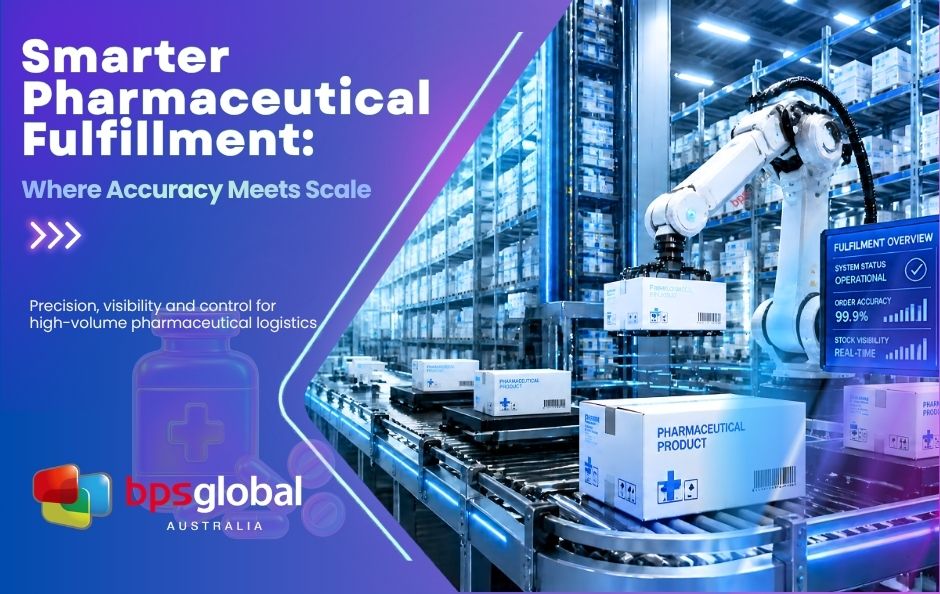
Smarter Pharmaceutical Fulfilment: Where Accuracy Meets Scale
In pharmaceutical logistics, a delayed order is inconvenient. An inaccurate one can be far more serious. That is why pharmaceutical distributors, pharmacy chains, and healthcare e-commerce businesses need fulfilment operations built around precision, visibility, and control — not speed alone.
BPS Global Australia helps these businesses modernise their warehouses with intelligent automation that supports high-volume fulfilment while protecting the standards the industry demands.
The Real Pressure on Pharma Warehouses
Pharmaceutical fulfilment is rarely straightforward. A single operation may handle prescription medicines, wellness products, medical devices, personal-care items, and temperature-sensitive stock—all with different handling rules and customer expectations.
Meanwhile, the way patients and consumers purchase healthcare products is changing. More orders now originate online, with expectations for rapid dispatch, accurate delivery updates, and convenient collection options. Traditional manual warehouses can meet these needs at low volume, but they become harder to manage as order volumes, SKU counts, and channel complexity increase.
The challenge is not simply to move more goods. It is to move the right goods, in the right condition, with complete operational confidence.
Automation That Supports Compliance and Control
For pharmaceutical businesses, automation must do more than increase throughput. It should strengthen the controls that keep operations safe and accountable.
BPS Global Australia focuses on connecting robotics with intelligent workflow management, so that every task—from replenishment to picking and dispatch—can be coordinated consistently across the warehouse.
This enables operations to better manage:
• Product traceability throughout the fulfilment journey
• Stock rotation and expiry-related handling requirements
• Batch-level visibility across inventory and order workflows
• Controlled picking processes that reduce the risk of human error
• Clear operational data for planning, auditing, and continuous improvement
By bringing goods to operators rather than requiring staff to search for them, goods-to-person automation also creates a more structured and repeatable picking environment.
Designed Around Pharmaceutical Order Profiles
No two pharmaceutical warehouses operate in exactly the same way. Some prioritise rapid single-item e-commerce fulfilment; others focus on replenishing pharmacy branches, managing bulky stock, or supporting urgent orders alongside routine demand.
BPS Global Australia takes an operation-first approach. We assess how products flow through the facility, where bottlenecks occur, and which order types drive the greatest operational pressure. The resulting solution is designed around those realities.
Typical applications include:
• E-commerce fulfilment for direct-to-consumer healthcare orders
• Pharmacy replenishment across retail and clinic networks
• High-density storage for growing SKU ranges
• Multi-channel fulfilment combining online, retail, and wholesale demand
• Returns handling to recover value and maintain inventory accuracy
Growth Without Disruption
One of the biggest concerns for pharmaceutical businesses considering automation is scalability. A solution that works today may not support tomorrow’s volumes, new product categories, or additional fulfilment channels.
Modular robotics offers a practical answer. Businesses can automate a defined area first—such as e-commerce picking or high-density storage—then expand robot fleets, workstations, and storage capacity as demand evolves.
This phased approach reduces upfront risk and allows automation investment to keep pace with business growth.
From Efficiency to Competitive Advantage
Automation should not be viewed simply as a cost-saving exercise. For pharmaceutical businesses, it can become a foundation for better customer service, stronger inventory control, and greater resilience during demand peaks.
With BPS Global Australia, pharmaceutical operators can build fulfilment operations that are accurate by design, adaptable by nature, and ready to scale with the future of healthcare commerce.
CONTACT US
Talk to Our Industry Experts About Your Needs