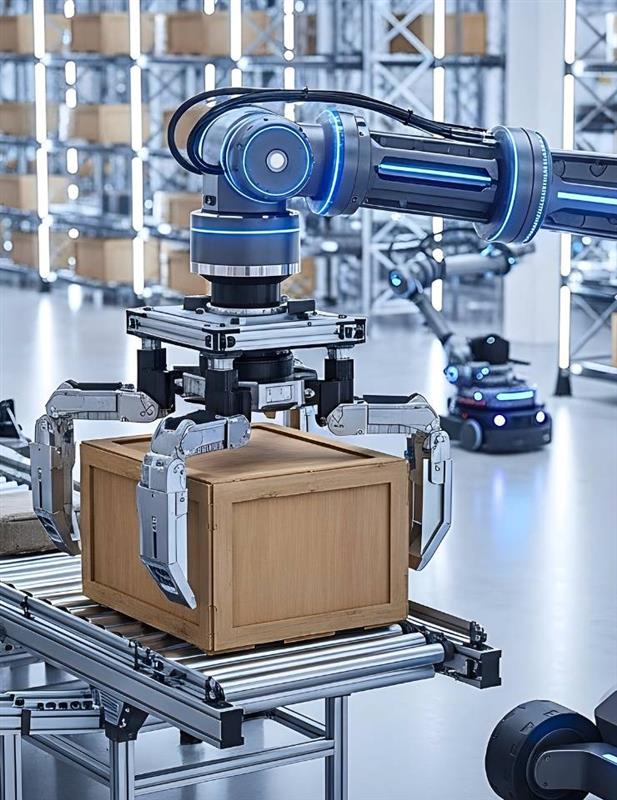
Warehouse Automation in Hong Kong: Driving Efficiency and Innovation in a Global Logistics Hub

As one of the world's busiest logistics and trade hubs, Hong Kong plays a crucial role in global supply chains. With its strategic location, advanced infrastructure and proximity to Mainland China, the city is a key gateway for goods flowing between Asia and the rest of the world.
Hong Kong's warehousing and logistics industry faces unique challenges due to high population density, limited land availability and escalating operational costs. In response, many businesses are embracing warehouse automation as a solution to stay competitive, improve efficiency and overcome spatial limitations.
This blog article explores the current state of warehouse automation in Hong Kong, the key drivers pushing the adoption of automation technologies and real-world examples showcasing how leading logistics companies are leveraging automation to transform their operations.
Key Drivers of Warehouse Automation in Hong Kong
- Limited Space and High Land Costs
One of the most pressing challenges for warehousing in Hong Kong is the scarcity of available land. Warehouses often need to be located close to ports, airports and urban centres to ensure efficient logistics operations. However, land in these prime locations is limited and expensive, forcing companies to explore vertical expansion. Automated storage systems that can operate in multilevel warehouses help businesses maximise the use of available space. Technologies like Automated Storage and Retrieval Systems (AS/RS) and Autonomous Mobile Robots (AMRs) enable goods to be stored and retrieved in tight spaces, making vertical warehousing a feasible option. - Rising Labour Costs and Workforce Shortages
Labour shortages and rising wages in Hong Kong have also made warehouse automation an attractive proposition. The logistics industry has long been dependent on manual labour for tasks such as picking, packing and sorting. However, finding sufficient manpower has become increasingly difficult. As labour costs climb, automation allows companies to reduce their dependency on human labour for repetitive, mundane tasks, while reallocating human workers to higher-value roles such as oversight, maintenance and customer service. Automated systems also allow warehouses to operate 24/7, drastically increasing throughput. - Demand for Speed, Accuracy and Scalability
The e-commerce boom has brought new challenges to warehousing operations in Hong Kong. Online shoppers expect fast delivery times, often within the same day or the next day. As order volumes surge, warehouses must process orders faster and more accurately than ever. Automation technologies, such as conveyor systems, robotic sorters and artificial intelligence-driven order-picking solutions, enable warehouses to handle larger volumes with higher accuracy and less reliance on manual intervention. By integrating automated systems, companies can ensure they meet tight delivery deadlines while maintaining operational precision. - Operational Resilience and Flexibility
In a dynamic city like Hong Kong, where unexpected events such as typhoons can occur, automation has empowered businesses to maintain smooth and uninterrupted operations. Automated warehouses can function with fewer staff on-site, making it easier to implement social distancing or operate with a reduced workforce during emergencies. Additionally, automated systems offer flexibility, allowing companies to quickly scale operations up or down depending on demand fluctuations.
Real-World Cases of Warehouse Automation in Hong Kong
HK Electric’s Automation Journey
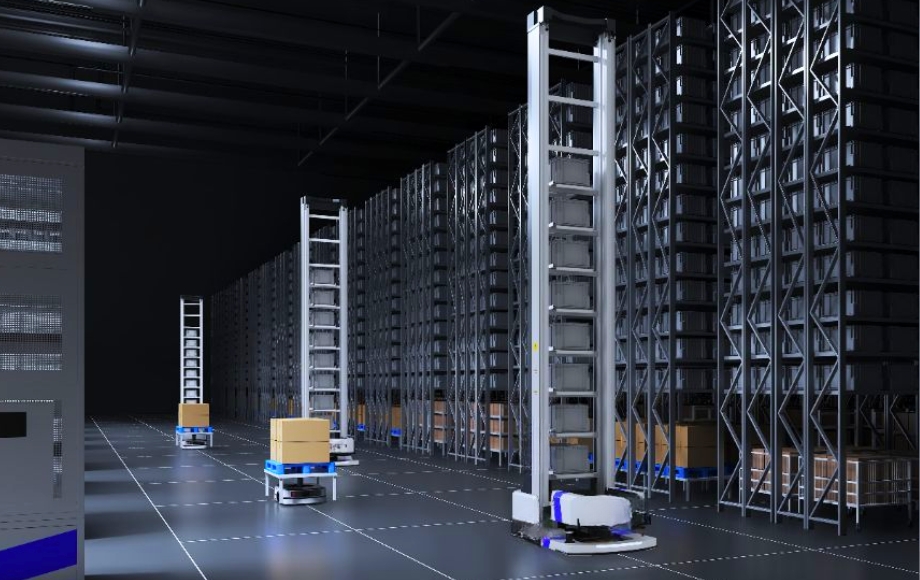
HK Electric (HKE), one of the city’s leading utility providers, adopted a warehouse automation system from BPS to streamline its inventory management and optimise warehouse space. With the increasing complexity of handling large volumes of critical equipment and spare parts for its operations, HKE needed a solution that could improve accuracy and reduce manual handling. To address HKE’s storage challenges, BPS produced the inventive “Elevating Transfer Vehicle Storage System” (ETVSS) that revolutionised their cable drum and transformer storage. The customised system optimises space by enabling vertical storage across all levels, preventing drum damage and streamlining inventory management. The intelligent software and multi-level racking facilitate rapid and accurate item retrieval from any location within the facility.

Key Benefits: By implementing BPS's automated warehouse solution, HKE reduced manual errors, improved space utilisation and significantly shortened lead times for retrieving equipment. The system ensures seamless operations, especially when handling high volumes of maintenance parts required for critical infrastructure projects.
Advanced Manufacturing Centre (AMC): Realising Hong Kong’s Re-industrialisation
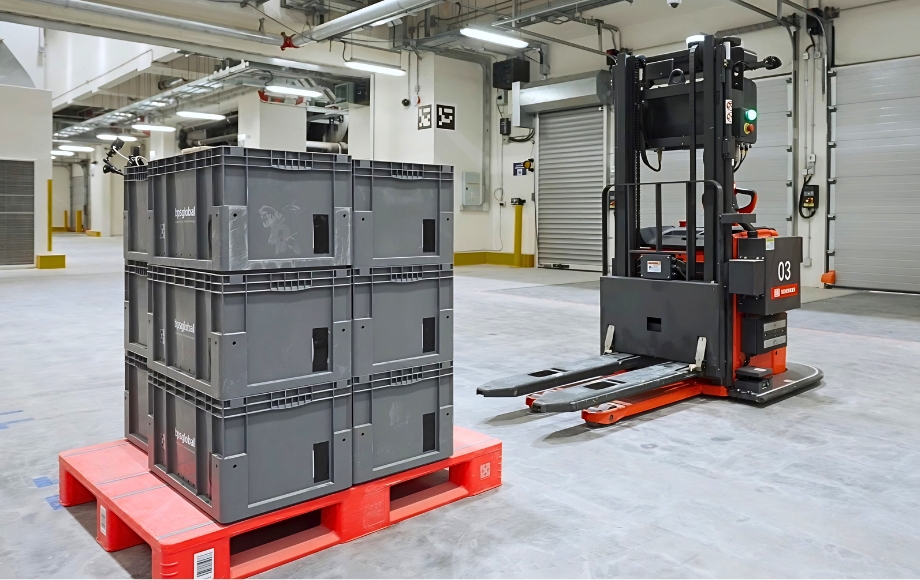
To align with Hong Kong’s reindustrialisation policy and to meet the needs for smart industrial production, the company has provided logistics infrastructure development and consulting services in building Hong Kong’s first Advanced Manufacturing Centre (AMC), establishing Asia’s first integrated production facility combining automation, smart logistics and cross-industrial manufacturing capabilities. The automated shared logistics centre is equipped with advanced logistics technology such as pallet storage systems, autonomous mobile robots, high-speed conveyors, high-system shuttle systems, and autonomous guided forklifts, which are all integrated and controlled by a Warehouse Executive System (WES) synchronising automated operations.

Key Benefits: With the automation solution provided by BPS, AMC achieved a significant improvement in throughput, reduced operational costs, and improved accuracy in handling. The flexibility of autonomous mobile robots allowed AMC to scale operations as demand increased, ensuring optimal warehouse productivity at all times.
Challenges to Implementing Warehouse Automation in Hong Kong
Despite the clear advantages, implementing warehouse automation in Hong Kong comes with its share of challenges:
- High Initial Investment
The upfront costs for implementing automation technologies, such as robotics and AI-driven systems, can be significant. Smaller companies may find it difficult to justify such an investment, especially if they do not have the scale or order volumes of larger logistics players. - Space Limitations
Hong Kong's limited land availability not only drives the need for automation but also complicates it. Automated systems often require specialised infrastructure, which may not be compatible with older, more compact warehouse designs. Retrofitting existing warehouses to accommodate automated systems can be both costly and logistically challenging. - Skilled Labour Shortage
While automation reduces the need for manual labour, it also requires a skilled workforce to manage, maintain, and optimise the technology. Hong Kong faces a shortage of skilled workers in areas such as robotics engineering, data analytics, and AI. As automation becomes more widespread, companies will need to invest in training and upskilling their workforce to meet the technical demands of these systems.
The Road Ahead for Warehouse Automation in Hong Kong
Despite these challenges, the future of warehouse automation in Hong Kong is bright. Advances in robotics, AI, and Internet of Things (IoT) technologies are making warehouse systems smarter, more flexible and more cost-effective. As automation technologies become more accessible, even small and mid-sized companies in Hong Kong will be able to leverage these tools to improve their operations.
Moreover, government initiatives aimed at promoting innovation and technology adoption will likely accelerate the deployment of automation in logistics. For instance, the Hong Kong Government’s Smart City Blueprint encourages businesses to adopt smart logistics solutions, which could pave the way for more automated warehouses in the coming years.
In conclusion, warehouse automation is set to play a pivotal role in shaping the future of Hong Kong’s logistics industry. As businesses invest in automation to tackle the challenges of limited space, rising labour costs, and the need for greater efficiency, Hong Kong will continue to cement its position as a leading logistics hub in Asia and beyond. The success stories of companies like HK Electric, Advanced Manufacturing Centre (AMC) and HACTL demonstrate the transformative potential of automation and its ability to drive operational excellence in a space-constrained, high-demand environment.
MORE Blogs

Pallet Shuttle System | High-Density Storage Solutions
The Pallet Shuttle System is one of the core solutions for achieving highly efficient pallet handling in modern warehouse management. By utilising automated machinery running on racking rails, it drastically reduces the need for manual operations and forklift entry into storage aisles. BPS Global Australia provides one-stop shuttle system planning, installation, and maintenance services, helping enterprises maximise storage density and operational efficiency while saving valuable space and labor costs.
Operating Principles & Core Advantages
The pallet shuttle travels automatically along the racking rails, receiving tasks via wireless commands to transport pallets to designated locations. Unlike traditional warehousing, the shuttle car operates seamlessly within multi-tier racking designs, enabling flexible vertical and horizontal routing. The system can be configured to execute First-In, First-Out (FIFO) or Last-In, First-Out (LIFO) retrieval models based on your business needs, highly enhancing the flexibility of logistics turnover.
The system features a highly modular design. Industrial-grade lithium batteries, drive modules, and sensor devices can all be replaced independently without returning the entire machine to the factory for repairs. Furthermore, it integrates flawlessly with your Warehouse Management System (WMS) and Warehouse Control System (WCS) to synchronise real-time inventory data and eliminate human errors.
For enterprises, adopting a high-efficiency pallet handling solution delivers three substantial benefits:
- Maximise Storage Density: Fully utilises the vertical height of the warehouse, accommodating significantly more pallets within the same footprint to achieve ultimate high-density storage.
- Reduce Operational Costs: Decreases reliance on manual labor and traditional forklifts, driving long-term savings in energy and manpower expenses.
- Enhance Operational Efficiency: Automated workflows shorten pallet retrieval times, accelerating order processing and inbound/outbound fulfillment.
Pallet Shuttle Systems: Model Lineup
BPS offers a diverse range of high-efficiency pallet handling models tailored to the specific needs of various industries, including e-commerce, cold chain, and manufacturing:
Smart 4-Direction Shuttle Robot
The 4-direction shuttle is a highly automated intralogistics equipment capable of traveling freely along both longitudinal (X-axis) and transverse (Y-axis) racking rails. Equipped with track-changing capabilities, it maneuvers flexibly in all four directions. As the core equipment of modern automated warehouses, it significantly boosts space utilisation and throughput efficiency.
- Integrated Storage & Retrieval: Delivers goods directly to the designated slot via system commands without the need for secondary handling.
- Intelligent Dynamic Management: Built-in control systems and warehouse mapping optimize travel paths and update inventory locations in real-time.
- 3D Dense Storage: Tailored configurations and combinations based on the warehouse environment to maximise space utilisation.
- High Scalability: Flexibly add more shuttle cars as your business grows to meet phased expansion needs.
Shuttle Robot Special Hoist (Vertical Conveyor)
- High-Speed Operation: Delivers highly efficient vertical transport, allowing shuttle robots to maintain peak operational speeds.
- Integrated Control: Connects with the WCS for real-time cargo data exchange, achieving unified management of storage and production.
- Strong Docking Capability: Interfaces seamlessly with various shuttle robots and cargo types.
- Simple & Durable Structure: Designed for logical simplicity, low energy consumption, minimal rail wear, and high durability.
- 4-Way Movement & In-Place Track Changing: Can retrieve and store goods at any location on the same horizontal plane.
- Multi-Tier Handling: Equipped with specialized picking tools to achieve high-efficiency storage and retrieval across 1 to 5 vertical tiers.
- Real-Time Monitoring: Centrally coordinated by the WCS to monitor coordinates, traveling speed, and battery levels in real-time.
- Flexible Processing Capacity: Supports multi-device collaborative operations, boosting throughput by up to 3 times compared to traditional models.
- High-Speed Precise Positioning: Fast traveling speed with rapid telescopic forks for automated inbound/outbound handling of totes and cartons.
- Flexible Material Supply: Automatically retrieves goods based on real-time production line demands, revolutionizing traditional workflows.
- Advanced Track-Changing Technology: Switches track flexibly, increasing transport speeds several times over traditional suspension chains.
- Frees Up Floor Space: Travels stably on overhead tracks, saving precious factory floor space.
Cold Storage Dedicated Shuttle Robot
Specifically engineered for low-temperature cold storage environments, operating reliably at temperatures as low as -35°C. It is the ideal automation solution for cold chain warehouses.
- 4-Way Smart Driving: Travels freely across intersecting 3D racking rails. Real-time management by the central system drastically reduces error rates.
- Unmanned Operation: Fully automated goods distribution within the warehouse eliminates the need for staff to frequently enter freezing environments, mitigating occupational safety risks.
- Maximised Energy Efficiency: High-density storage design increases inventory per unit area, diluting and lowering the refrigeration energy consumption per unit of cargo.
Note: Every model supports customised adjustments, including load capacity, travel speed, and communication protocols, ensuring perfect integration with clients' existing facilities.
Frequently Asked Questions (FAQ)
Q1: Which industries are best suited for Pallet Shuttle Systems?
They are ideal for e-commerce logistics, frozen foods, pharmaceutical warehousing, manufacturing raw material storage, and third-party logistics (3PL). For the food and pharmaceutical industries, which require strict adherence to First-In, First-Out (FIFO) to manage product shelf life, the shuttle system provides the most efficient and precise high-density storage solution.
Q2: Which automated systems can the shuttle system integrate with?
The shuttle system boasts high compatibility and can be seamlessly integrated with automated stacker cranes, conveyor lines, AGV/AMRs, and WMS/WCS platforms to build an end-to-end smart warehousing solution.
Q3: What precautions should be taken when installing and operating a pallet shuttle?
Before deployment, we recommend an expert assessment of racking load-bearing capacity, floor flatness, and power configurations. During daily operations, routine checks on battery health and rail cleanliness are necessary to ensure the long-term stability of efficient pallet handling.
Q4: Is the system flexible enough for future business expansion?
Yes. The entire system features a modular design. You can progressively add more shuttle cars or expand the rail network in response to business growth. This offers immense flexibility without requiring massive, one-off upfront investments.

Warehouse Automation Explained: From Conveyors to Robots What Australia Logistics Can’t Afford to Ignore
Handling 10,000 orders in a traditional warehousemay require 50 workers pulling overnight shifts. In contrast, a warehouseautomation system can complete the same workload with just over a dozen staff —within regular office hours.
The difference isn’t manpower; it’s warehouseautomation.
With Hong Kong’s soaring land prices and risingoperating costs, traditional warehouse operations are struggling to keep upwith fast-moving e-commerce and supply chain demands.
So, what types of warehouse automation systems areavailable in Australia? And how can they solve real operational challenges?This guide breaks it down.
Common Warehouse Automation Systems in Australia
To improve efficiency and maximise ROI, businessesneed a clear understanding of how different warehouse automation solutions work,and where they deliver the most value.
1. Conveyor Systems in Warehouse Automation
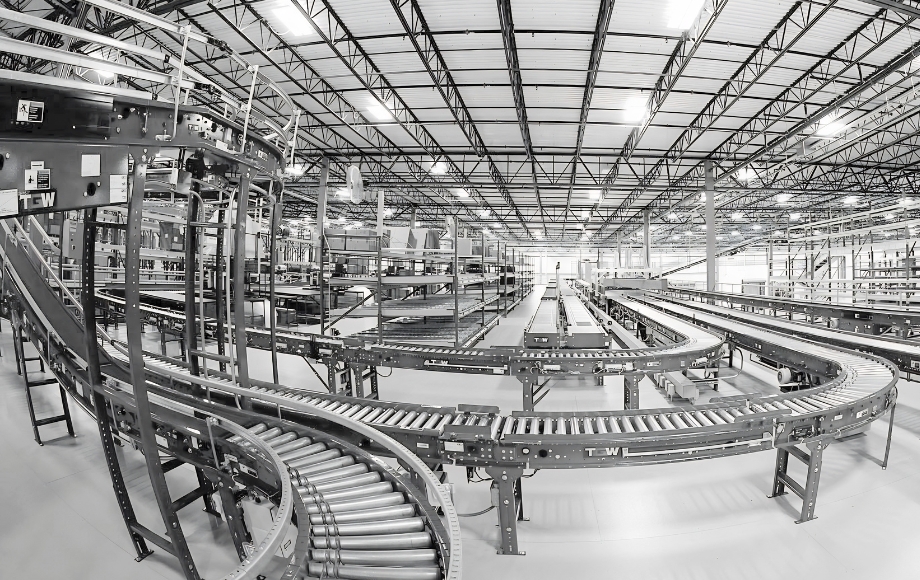
Conveyor systems are one of the most widely usedwarehouse automation solutions, designed for point-to-point and long-distancematerial handling.
In traditional warehouses, workers spendsignificant time walking and transporting goods. With conveyors, items moveautomatically between receiving, storage, picking and packing zones.
Modern automated conveyor systems integrate barcodescanning and weight detection to identify and remove sorting errors — improvingboth accuracy and throughput.
2. AMR Warehouse Robots & Vision-GuidedForklifts (AGF)
AMR warehouse robots (Autonomous Mobile Robots) andAGF (Automated Guided Forklifts) are rapidly transforming warehouse operationsin Hong Kong.
Unlike traditional AGVs that rely on fixed tracks,AMRs use real-time navigation and environmental sensing to move freely andavoid obstacles. This makes them ideal for dynamic warehouse environments.
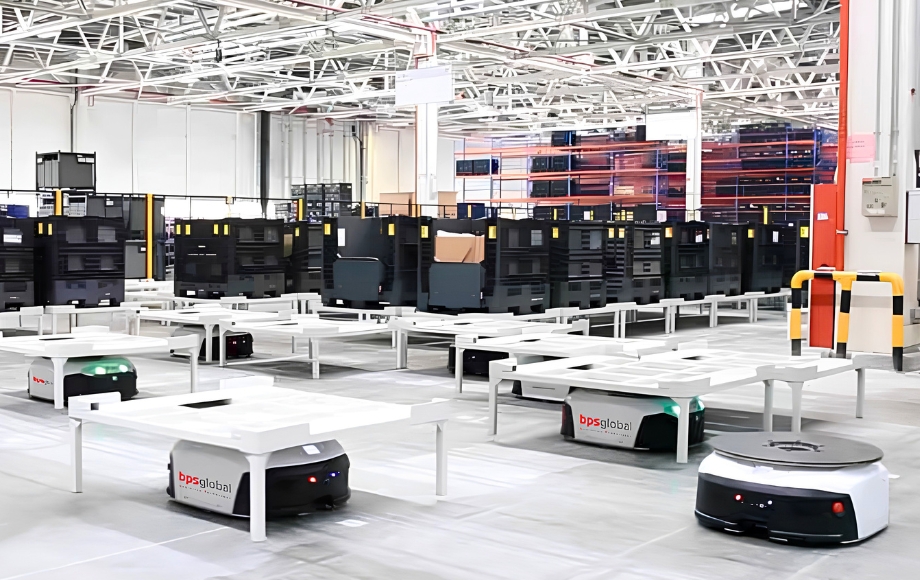
AMRs enable a “goods-to-person” picking system,where robots deliver items directly to operators — reducing walking time andboosting productivity.
Meanwhile, AGF forklifts automate pallet transportand high-risk handling tasks. They improve warehouse safety while enabling 24/7automated operations, reducing reliance on manual labor.
3. AS/RS Australia: Automated Storage and RetrievalSystems
With limited land availability, AS/RS (AutomatedStorage and Retrieval Systems) in Hong Kong are essential for maximising space.
These systems use high-rise racking, shuttlesystems and stacker cranes to achieve high-density storage — often severaltimes greater than traditional warehouse setups.
Integrated with WMS and WCS, ASRS systems automateinventory storage and retrieval, reducing manual handling and improvingaccuracy.
For businesses managing large SKU volumes and highturnover rates, AS/RS is a critical warehouse automation investment.
4. Mezzanine Systems for Warehouse Space Optimisation
A warehouse mezzanine system creates additionalstorage levels within existing facilities, maximising vertical space withoutmajor structural changes.
This is especially useful in Hong Kong’s olderindustrial buildings. When combined with lifts or automation equipment,mezzanines can significantly increase storage capacity at a relatively lowcost.
By combining these warehouse automationtechnologies, businesses can overcome three key challenges in Hong Kong: highrent, labor shortages and operational inefficiencies.
Case Study: Warehouse Automation in Australia
A major e-commerce company operating a 40,000 sq.ft. warehouse in Kwai Chung faced rapid order growth, with peak volumesexceeding 10,000 orders per day.
Manual picking using paper lists led to frequenterrors, long working hours and high staff turnover — common challenges intraditional warehouse operations.
To improve efficiency, the company implemented acustom warehouse automation solution with BPS:
- Installed mezzanine racking to increase storage and picking capacity
- Deployed AMR warehouse robots for a goods-to-person picking system
- Integrated automated conveyor systems for seamless packing and dispatch
Results of Warehouse Automation Implementation
The transformation delivered measurable results:
- 99.9% picking accuracy
- 3× increase in order processing efficiency
- 40% reduction in labour requirements
Warehouse staff shifted from manual picking tosystem operation and quality control —improving both productivity and jobsatisfaction.
BPS Global Australia: Warehouse AutomationExperts in Australia
Successful warehouse automation in Australia requires more than just equipment, it demands expert planning, systemintegration and technology alignment.
BPS Global Australia provides end-to-endwarehouse automation solutions, including:
- Automation strategy and data analysis
- Equipment selection (AMR, AGF, AS/RS, conveyors)
- Mezzanine system design
- Full system integration (WMS/WCS)
- On-site implementation and support
Upgrade yourwarehouse with the right automation strategy.
Contact BPS Australia today to start your warehouse automation journey andstay ahead in Hong Kong’s competitive logistics landscape.
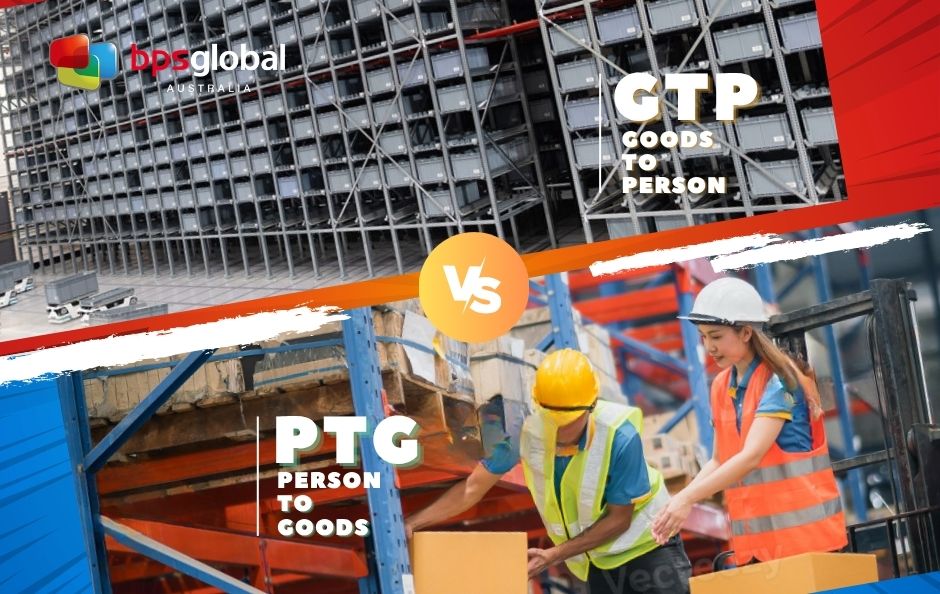
Goods-to-Person vs Person-to-Goods: The Key Choice for Boosting Warehouse Efficiency
Are your warehouse staff constantly walking back and forth every day, spending excessive time locating and picking items — yet still struggling to keep up with growing order volumes? The root issue often isn't manpower, but whether your picking model suits your business.
"Goods-to-Person" (GTP) refers to automated systems delivering items directly to a stationary picking workstation, while "Person-to-Goods" (PTG) requires workers to travel to storage locations to pick items. Let's break down these two approaches to help you determine which model can maximise your operational performance.
Person-to-Goods vs Goods-to-Person: A Comprehensive Comparison
With high rents and ongoing labour shortages in Hong Kong, choosing the right picking model has a major impact on operating costs.
A Goods-to-Person system replaces manual picking with automation, significantly improving efficiency while maximising limited warehouse space — making it especially suitable for growing businesses.
While Person-to-Goods has a lower entry barrier, increasing order volumes will gradually drive up labour and space costs, eroding profit margins.
Key Differences
Technology Behind Goods-to-Person Systems
It's important to note that GTP is not a single piece of equipment, but a combination of automation solutions. Depending on warehouse size, SKU count, and order profiles, businesses can choose the most suitable setup:
- Grid-based Systems
Robots transport entire shelves or pallets to picking stations. These systems require less rigid rack structures, are faster to deploy, and allow multiple related SKUs on the same shelf — improving picking efficiency. - Shuttle Systems
Extract individual totes and deliver them to workstations before returning them. With standardised structures, they support extremely high speed and throughput — ideal for high-frequency operations with relatively concentrated SKUs. - Robotic GTP with Fixed Racks
Robots retrieve totes from pre-designed fixed racking systems. These solutions maximise vertical space (up to 30 feet or more), making them ideal for high-SKU, high-density storage environments. - Carousel Systems
Use horizontal or vertical rotation to bring items to operators. They are ideal for space-constrained warehouses and help improve picking accuracy while reducing manual errors.
Each architecture has its strengths in space utilisation, speed, and investment cost. Businesses should choose based on their order structure, SKU characteristics and future scalability — not just the level of automation.
How to Choose the Right Model for Your Warehouse
Selecting the right picking model requires evaluating several factors:
- Daily Order Volume
If you process a few hundred orders per day with limited growth, PTG may suffice. But if orders exceed 1,000 daily or are rapidly growing, GTP offers significant efficiency advantages. - SKU Count and Product Characteristics
The more SKUs and the smaller the items, the greater the benefit of GTP. Large or heavy items may require specialised automation solutions. - Warehouse Size and Lease Terms
With typical lease cycles of 2–3 years, companies must assess ROI timelines. If space is limited but storage needs are growing, GTP's dense storage is ideal. - Seasonal Demand Fluctuations
For businesses with peak seasons, GTP systems provide far greater scalability than relying on temporary labour.
Ultimately, beyond order volume and space, companies should also evaluate ROI, system integration costs, and operational disruption during implementation.
Real Case: How a Hong Kong E-commerce Brand Improved Efficiency
A local health supplement e-commerce brand previously operated a 2,000 sq ft warehouse in Kwai Chung using a traditional PTG model.
As order volume grew to 800 orders per day, five pickers were no longer sufficient. During peak seasons, error rates reached 3%, leading to frequent returns and customer complaints.
After engaging BPS Global for a warehouse assessment, the team recommended implementing a compact AMR-based GTP system and redesigning the warehouse layout.
Results after transformation:
- Picking staff reduced from 5 to 2
- Throughput increased from 450 to 1,200 order lines per hour
- Picking accuracy improved to 99.97%
- Storage capacity increased by 60% within the same space
Most importantly, the company postponed relocating to a larger warehouse, saving significant rental costs.
Tailor-Made Warehouse Solutions by BPS Global
Modern GTP solutions can integrate seamlessly with warehouse management systems (WMS), conveyors, pick-to-light systems, and robotic arms — creating a fully connected workflow from picking to sorting and dispatch.
No matter what stage your business is in, your picking strategy directly impacts operational costs and customer experience.
With extensive experience in Hong Kong and cross-border logistics, BPS Global provides end-to-end warehouse solutions — from PTG setups to full GTP transformation. From system design and equipment selection to process reengineering and daily operations support, BPS delivers one-stop solutions to help your warehouse achieve efficiency, accuracy, and scalable growth.
Contact Us today to start your Goods-to-Person upgrade journey.
CONTACT US
Talk to Our Industry Experts About Your Needs